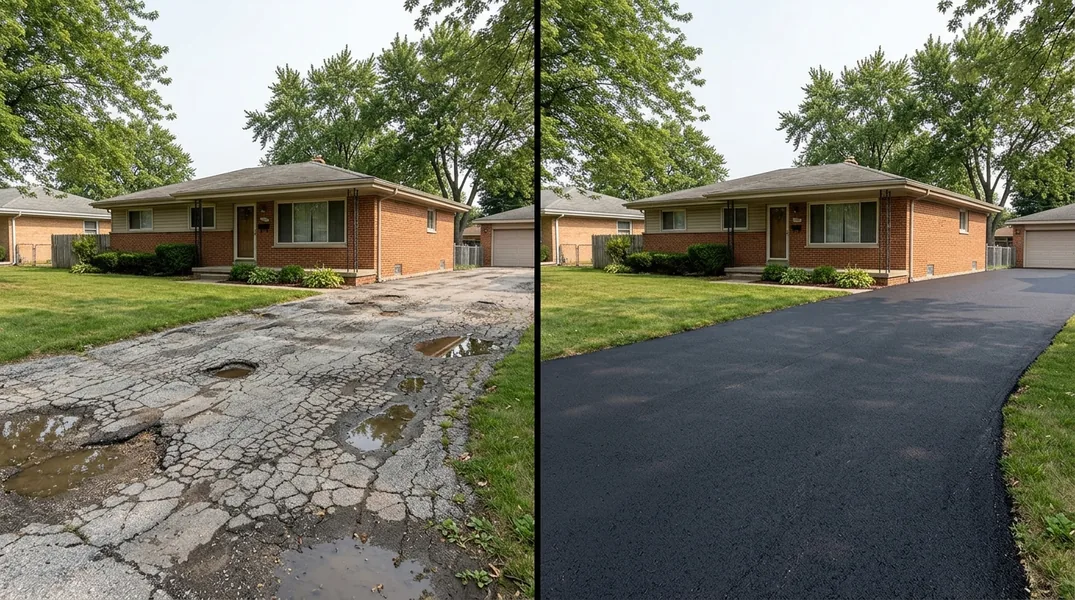
Why Gary's Historic Neighborhoods Have Drainage Problems
If you own one of the charming early-1900s homes in Gary near the old steel mills, you've likely noticed that water doesn't always drain the way it should from your driveway. This isn't a coincidence. The neighborhoods surrounding the historic mill district were built on terrain that presents natural drainage challenges, combined with aging infrastructure that was never designed for modern rainfall patterns or freeze-thaw cycles.
The original homes in this area were constructed when engineering standards were quite different from today's practices. Many driveways were poured directly on compacted soil without proper grading or subsurface drainage systems. Over the past century, ground settlement, shifting clay soils, and the weight of vehicles have created low spots and depressions where water naturally pools. When Driveway Repair becomes necessary, addressing the root cause of water damage is just as important as fixing the visible cracks and deterioration.
Understanding Water Pooling on Your Driveway
Water pooling on driveway surfaces is more than just an aesthetic problem. When water sits on asphalt instead of flowing away, it penetrates the surface and weakens the base layers underneath. In Gary, where winters are harsh and freeze-thaw cycles are frequent, this standing water becomes a serious structural threat. The water seeps into small cracks, freezes, expands, and causes the cracks to widen. This cycle repeats each winter, eventually leading to potholes, severe cracking, and the need for expensive repairs.
Homes built in the early 1900s often have driveways that slope toward the house or toward the street in ways that create natural collection points. You might notice puddles that take days to evaporate after rain, or water that seems to flow in the wrong direction. These are signs that your driveway's grading has shifted over time. The good news is that modern Asphalt Driveway Paving & Installation techniques can correct these problems and prevent future water damage.
Driveway French Drain Solutions for Historic Homes
A driveway french drain is one of the most effective solutions for homes experiencing persistent water pooling issues. This drainage system works by creating a permeable trench along the edge of your driveway (or sometimes underneath it) that collects water and directs it away from the asphalt surface and your home's foundation. The system uses perforated pipe, gravel, and landscape fabric to allow water to flow safely away while preventing soil from clogging the pipe.
For early-1900s homes near the steel mills, a french drain system is particularly valuable because it addresses the underlying drainage problem rather than just patching the asphalt surface. When properly installed, a french drain can redirect water that would otherwise pool on your driveway toward a storm drain, dry well, or natural drainage area. This protects not only your driveway but also your home's foundation, basement, and crawlspace from water intrusion. The system is invisible once installed, so it doesn't detract from your home's historic curb appeal.
Installing a french drain requires careful planning and professional expertise. The slope of the trench, the diameter and perforations of the pipe, the depth of installation, and the location of the outlet all affect how well the system works. Gary Asphalt Paving has experience designing and installing french drain systems specifically for older homes in your neighborhood, taking into account the unique soil conditions and grading challenges that exist in properties built more than a century ago.
Trench Drain Driveway Systems: A Modern Approach
Another excellent option for managing water on your driveway is a trench drain driveway system, sometimes called a linear drain or channel drain. Unlike a french drain that works primarily underground, a trench drain uses a shallow channel installed along the surface of your driveway to capture water before it can pool. The channel is typically covered with a metal or plastic grate that's flush with the asphalt surface, making it safe for vehicles and pedestrians while being highly visible and functional.
Trench drains are particularly useful for driveways where water naturally collects in a specific area, such as at the bottom of a slope or where the driveway meets the street. They're also an excellent solution if you need a drainage system that can be added to an existing driveway without major excavation. The captured water flows through the trench to a drainage outlet, preventing the pooling that damages asphalt over time. For homeowners in Gary with limited yard space or complex drainage situations, a trench drain can be more practical than a traditional french drain system.
The key advantage of a trench drain is that you can see it working, and it requires less extensive excavation than a french drain. However, it does require regular maintenance to ensure the grate stays clear of debris and the drain doesn't become clogged with sediment. Professional installation is essential to ensure proper slope and connection to your home's drainage infrastructure.
Combining Drainage Solutions with Asphalt Resurfacing & Overlay
Once you've installed proper driveway drainage solutions, the next step is to repair or resurface the asphalt itself. If your driveway has already suffered damage from years of water pooling, Asphalt Resurfacing & Overlay can restore it to like-new condition. This process involves cleaning the existing surface, repairing any significant damage, and applying a new layer of asphalt over the top. The overlay approach is often more cost-effective than complete removal and replacement, especially for driveways that still have solid base layers.
For historic homes in Gary, combining a new drainage system with asphalt resurfacing creates a comprehensive solution that addresses both the symptoms and the underlying cause of driveway deterioration. A professional contractor will assess the condition of your existing driveway, identify where water damage has occurred, and recommend whether patching, overlay, or complete replacement is the best approach for your situation. If your driveway has extensive cracking or has settled unevenly, you may also need Pothole Repair & Asphalt Patching before an overlay can be applied.
Getting Professional Help: Driveway Drainage Solutions Near Me
If you're noticing water pooling on your driveway or you're concerned about drainage around your early-1900s home, the best first step is to have a professional assessment. Gary Asphalt Paving specializes in diagnosing drainage problems and recommending solutions tailored to your specific property. Our team understands the unique challenges that older homes in your neighborhood face, from unstable soil conditions to inadequate original grading.
During a site visit, we'll evaluate how water currently moves across and under your driveway, assess the condition of the asphalt, and discuss your options for french drains, trench drains, or other solutions. We'll explain the pricing for each approach so you can make an informed decision. Many homeowners are surprised to learn that investing in proper drainage now can save thousands of dollars in foundation repairs, basement waterproofing, and repeated driveway damage down the road.
Contact Gary Asphalt Paving today at (219) 400-7205 to schedule your free estimate. We're here to help you protect your home's most important asset: a well-maintained, properly draining driveway that will serve you for decades to come.
Looking for a professional asphalt paving contractor in Gary? Gary Asphalt Paving responds fast for all your asphalt paving needs.
Get a Free Quote