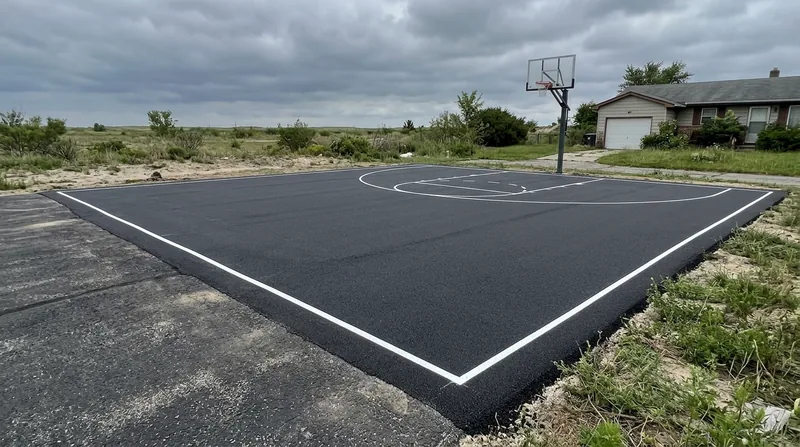




Sports Court & Path Paving in Gary requires a foundation that sheds water fast. Gary's Calumet lake plain holds moisture in clay and low ground, and a flat court surface pooling water becomes unplayable in days. We grade and compact the aggregate base to slope away from the playing surface, then lay hot mix asphalt pitched to drain before water sits on top. The freeze-thaw cycle that cracks driveways also breaks courts, so we build to the 36-inch frost line that Lake County demands, with tight edge compaction and proper base preparation. Whether you're building a residential court in Miller, Glen Park, or near the steel district, the ground conditions here require a contractor who understands both the terrain and the drainage challenge. Gary Asphalt Paving has been grading and paving courts and paths since 2009, and we know how the lake plain moves under a new surface.
Why Sports Court & Path Paving Matters in Gary's Climate and Soil
A basketball or tennis court built on the Calumet plain sits on clay that swells when wet and shrinks when dry. Without proper grading and a compacted base, the court surface settles unevenly, creating low spots where water pools. That standing water freezes in winter, thaws in spring, and pushes the asphalt up in heaves that crack the surface within a season. The lake's proximity deepens the frost line and intensifies freeze-thaw cycles, especially along the shoreline neighborhoods near the dunes. Proper base preparation and correct pitch are not luxuries here, they are the difference between a court that lasts and one that fails in its first winter.
- We excavate and grade the subgrade to remove soft clay and standing water pockets that invite frost heave.
- We compact aggregate base material in lifts to the frost line, testing density at each stage to ensure the court does not settle.
- We pitch the finished asphalt surface to shed water off the edges and into proper drainage, preventing pooling on flat ground.
- We use hot mix asphalt sized and bound to resist the salt, freeze-thaw, and heavy use that Gary courts endure.
A court built this way will give you years of reliable play instead of cracking and settling within months.
Key info: Gary's municipal code and any HOA architectural rules may govern court size, setbacks, and surface material. Verify requirements with your local building department and HOA before we begin grading, and we will help you navigate the permitting process.
How We Build a Court or Path That Stays Flat and Drains
Building a sports court in Gary starts with understanding the ground beneath it. We begin with a site visit to measure the area, check the slope, and test the soil. If the ground slopes toward the house or holds water, we grade first. Then we bring in aggregate base, compact it in layers, and proof-roll the finished base to confirm it will not settle under the weight of play or traffic. Finally, we pave hot mix asphalt with a slight crown or slope away from the center, so water runs off immediately instead of sitting on the surface.
- We excavate soft or wet subgrade material and replace it with compacted aggregate base brought to proper density.
- We establish the correct pitch or crown by setting grade stakes and checking elevation at multiple points.
- We proof-roll the finished base with heavy equipment to identify any soft spots before asphalt is laid.
- We pave the court surface with hot mix asphalt in a single or two-lift application, depending on the depth required.
- We compact the asphalt with heavy vibratory equipment to achieve proper density and a smooth, skid-resistant finish.
The result is a court or path that drains water, resists frost heave, and will not crack or settle under normal use.
Local example: A residential court in Glen Park's mid-century neighborhood sits on flat ground that holds water after snow melt. We graded the subgrade, brought in 6 inches of compacted aggregate base, and paved 2 inches of hot mix with a half-inch per foot pitch away from the house. The court sheds water in minutes and has remained flat and crack-free for over five years.
Asphalt Court and Path Methods: Comparing Your Options
Not all courts are the same, and not all require the same approach. A private residential court in a narrow Glen Park lot has different needs than a multi-use path or a court near the lakeshore where drainage is critical. We offer methods tailored to your site conditions, budget, and intended use. The table below outlines the most common approaches we use in Gary.
| Approach | Description | Best for |
|---|---|---|
| Full-depth new paving | Excavate subgrade, install compacted aggregate base to frost line, pave hot mix asphalt 2 to 3 inches thick with proper pitch. | New court construction, wet or unstable ground, areas prone to frost heave. |
| Base prep and overlay | Regrade existing base if settlement is minor, add or recompact aggregate, then pave 1.5 to 2 inches of hot mix over the existing base. | Courts with a sound base but poor surface or minor settling, budget-conscious projects. |
| Milling and repaving | Mill off the top 1 to 2 inches of old asphalt, recompact the base if needed, pave new hot mix, reestablishing proper pitch. | Existing courts with surface cracks but stable base, when the pitch has been lost to settling. |
| Gravel or recycled millings path | Compact aggregate or recycled asphalt millings 3 to 4 inches thick, pitched to drain, for low-traffic recreational paths. | Walking paths, light-use courts, budget constraints, or temporary surfaces pending future asphalt paving. |
Each method begins with an honest assessment of your existing surface or ground. If the base is sound and the pitch is correct, we do not tear out and rebuild. If the ground is soft or the pitch has been lost to settling, we fix it at the source.
Sports Court & Path Paving Cost in Gary: What to Expect
Sports court and path paving in Gary typically begins at $8,500 for a residential court 2,000 to 2,500 square feet with a sound base and minimal grading. That price covers full-depth excavation if needed, compacted aggregate base to the frost line, and 2 inches of hot mix asphalt with proper pitch. Larger courts, multi-use paths, complex drainage, or poor soil conditions will increase the cost. A court built on clay that must be excavated and replaced will cost more than one on stable sand. Access also matters: a court on a narrow lot in the old neighborhoods near the steel mills may require smaller equipment or hand work, which raises labor. A court in Glen Park or near the lakeshore on a larger parcel may allow efficient grading and paving.
The best way to understand your cost is to get a written estimate on site. We measure the area, evaluate the soil and existing grade, and provide a tonnage specification and a firm price. We do not quote asphalt paving by the square foot, because the ground beneath the surface drives the real cost. Two courts of the same size on different soil will have different prices. We recommend getting 2 to 3 estimates so you can compare not just price but also base preparation, asphalt thickness, and warranty. See our full pricing page for context on how we structure estimates, and call us at (219) 400-7205 for a free site visit and written quote.
Sports Court & Path Paving Near Me: What to Look for When Hiring a Contractor in Gary
Hiring the right contractor for a sports court or path is as important as the work itself. The paving trade attracts itinerant crews offering "leftover asphalt" and large discounts for cash deposits, and those crews often disappear when the court cracks. A local contractor with a local address, local plates, and years of work in Gary is the strongest signal of reliability. Ask whether the contractor is fully insured and can provide a certificate of insurance. Verify that the estimate includes a tonnage specification and asphalt thickness, not just a price per square foot. Check references from courts or paths built in your neighborhood, and ask how long those surfaces have held up. If your property is in an HOA, confirm that the contractor understands the architectural standards and can help you navigate approval. Finally, understand who pulls permits and who pays for them. In Gary, permitting varies by neighborhood, and your contractor should help you verify requirements with the building department.
- Ask for proof of insurance and verify coverage limits are appropriate for your project.
- Request a written estimate that specifies base depth, asphalt thickness, and total tonnage of material.
- Check references from recent court or path projects in Gary, Hammond, or nearby neighborhoods.
- Confirm that the contractor understands HOA rules or municipal setback and surface requirements for your lot.
- Clarify who handles permitting, who pays permit fees, and what the timeline is from estimate to completion.
We are fully insured and have been working in Gary and the surrounding Lake County area since 2009. We provide written estimates with tonnage and thickness, and we help homeowners navigate local permitting. Call (219) 400-7205 for a free estimate and to discuss your court or path project with someone who knows the Gary ground and climate.
Sports Court & Path Paving in Gary: Pricing Guide
| Service | Price | Details |
|---|---|---|
| Residential sports court (2,000-2,500 sq ft) | Starting at $8,500 | Full-depth base prep, compacted aggregate to frost line, 2 inches hot mix asphalt with proper pitch and drainage |
| Larger court or multi-use path (3,000-4,000 sq ft) | Starting at $12,000 | Expanded square footage, complex grading, or multiple drainage features; larger court surfaces with enhanced durability |
| Court with poor soil or extensive excavation | On estimate | Wet clay subgrade, soft spots, or significant settling requires site inspection to determine excavation depth and base material |
| Milling, base repair, and repaving existing court | Starting at $6,500 | Mill and recompact existing base, reestablish pitch, pave new hot mix surface for courts with sound base but failed surface |
| Travel and site visit | Included | No separate mileage or call-out fee for Gary and surrounding Lake County service area |
| Free estimate | Free | Written quote with tonnage and thickness specification, response within 24 hours at (219) 400-7205, no obligation to book |
Indicative pricing, the exact cost depends on square footage, finish, and site access. Free personalized estimate within 24h at (219) 400-7205.


